
So, let’s say you finally decided to create that website for your company to promote your services but now you are confronted with a series of strange and intricate terms. CSS, HTML, database,… and such, can create such a confusion for somebody who is not familiar with the language concerned in developing web pages. In fact, many beginners find themselves in this situation but there is always a solution at hand – information.
In this regard, especially two terms can create essential confusion: domain and hosting. Being essential for the very existence of any web page, it is very important to understand how they work and their implications. That is – if you want to develop a successful website.
>>What is Hosting Server?
To understand what a hosting server is, imagine a “virtual space” containing all the information stored in a webpage: multimedia content, scripts, CSS files, HTML code. According to their control characteristics and features, hosting servers can be provided free of charge or through paid services.
To better understand the differences between the two variants, here are some of the features of each type:
- Free hosting solution is generally limited, both in terms of support and resources. This variant also may use the publication of advertising banners on the web page as a counterpart to the use of the service. All these limitations related to storage space, limited use of databases and other technologies are part of the strategy to move to a paid plan.
- On the other hand, paid hosting service offers control and availability. No advertisements on your website, but a tailored plan according to your needs, with 24 hours customer support in most of the cases and all the features you want.
How to choose a hosting service?
If you decided to proceed and make a step further by choosing a web hosting service, you should take into considerations several aspects, in order to determine the best solution that fits your website in terms of resources and control.
First, try to determine the amount of space your website will require. Of course, you can not say exactly but you can estimate the level of resources, the type of content that will be used, the number of images – in general, prioritize service that are scalable. Knowing all these details from the very start can help your company to increase the available space on every necessary occasion.
Many plans use the size of the public intended to be reached as a metric for the monthly traffic that will be contracted. The rule is very simple here and also indispensable: the higher the number of visitors, the greater the traffic.
Make security a priority. Do not ignore control option. Choose companies that provide several options for those seeking the maintenance of sensitive data in security since a webpage can be the access key for a lot of private information. Pay attention to security protocols, as they define how the business will deal with digital transactions and other sensitive transactions.
Another important thing is control panel ease of access, since you will have to create new accounts, modify permissions, and contract new resources. Also, pay attention to the uptime of the service if you will use the hosting server to access critical resources. Most of the times, it ought to stay accessible for over 99% of hits, so that the impact of a system crash would affect just a small number of users. For marketing purposes, that presumes access to records for assessment, search for solutions that support analytics tools.
>>What is a domain?
Back in the early days of the internet domain names didn’t exist. Computers relied on IP addresses to find one another. However, as people are having a hard time remembering long strings of numbers, the domain name system was born, with the same purposes that IP addresses have: to locate web addresses but using easily memorized written address. We could say that domain is the “translation” of the server IP on which the page is hosted.
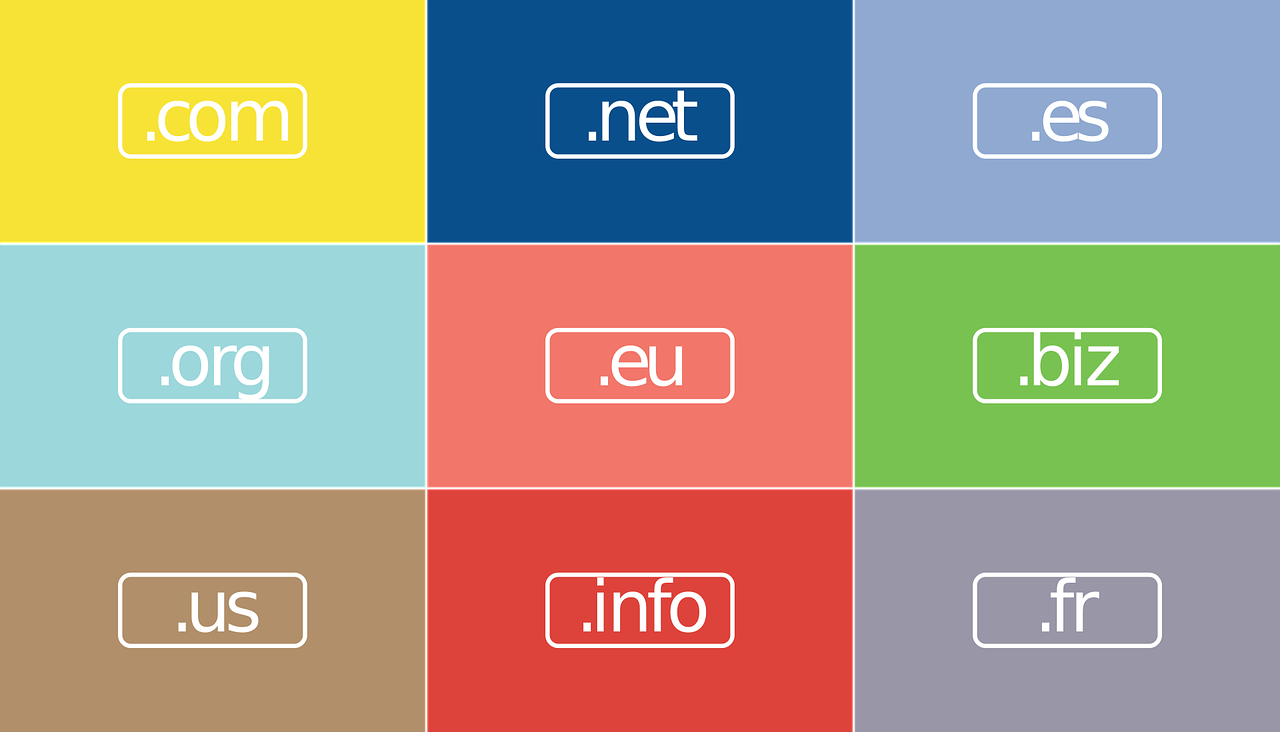
The domain name system was created in 1985, when there were only seven domain name options. Nowadays, internet is getting a little crowded and an URL structure may vary according to the type of address: pages ending in .com (short for “commerce”) for example, are set for business services; .gov is reserved for government agencies, agents, and offices, while .org was created for non-governmental organization, although at first it was intended for nonprofits.
Domain names are used in URLs to identify particular web pages. For example, a complete form of an address would be http://www.name-of-site.com, where HTTP stands for the communication protocol used by the World Wide Web (www) to define how messages are formatted and transmitted (in this case, the Hypertext Transfer Protocol), followed by the name of the page. The last two divisions (.com, .gov, .edu, .net, etc.) represent the indicators of the type of domain (commercial, governmental, educational, network etc.) and the country.
As technological developments evolved, accessing a page nowadays has become more easily: the need to enter “www” before accessing a domain has been eliminated and it is not uncommon to find pages without the country flag at the end of the URL.
How to hire a domain?
So, you’ve come up with the perfect name. Hiring of a domain is an option and is a quite simple process. Just follow the steps:
- Check the availability of the domain (through hosting companies)
- Register the domain (fill out a registration and make the payment for registration)
- Configure the DNS values or the domain to work on your site
DNS translates your domain names to IP addresses of the hosting server so browsers can load internet resources. DNS values will be made available to you by the hosting service provider.
Now that you have both a hosting and a registered domain, simply set up the DNS so that the two services “talk” and your website will work with the domain you want.
Good to know: renewal of the domain registration is done annually. You also have the possibility to register the domain for more than 1 year, by selecting another time period at the time of registration. Upon renewal, the address will be frozen for a couple of weeks if the user misses the deadline. While frozen, the domain will be disabled, but the person who registered it can still regain it if the renewal price is paid. If the domain is not renewed, it will expire and any other interested person may register it.
Domain and hosting – indispensable linked to the creation of a web page
Without the existence of a hosting server and domain registration, there is no way to create and publish a web page. They work together, so people can access content on the web. Just think about the hosting server as being a home, with the domain its address, allowing anyone on internet to find it.
Since they are two basic parts of any website, the company needs to carefully identify the services used to register the domain and store the web page. It will therefore prevent any inconvenience and ensure the site’s reliability. Moreover, the domain should be easy to remember so that people can always go back to your page. A good domain name is memorable; people can find your site and do business with you when they remember your name. A right domain name is essential for your business and brand identity, and reminds the public exactly who you are and what you do.
Thinking about registering a domain and hosting a website? Contact our team!